
Edit Content
Edit Content

$280.00

1 in stock

Description

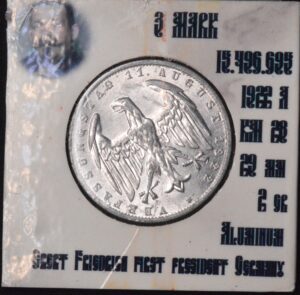
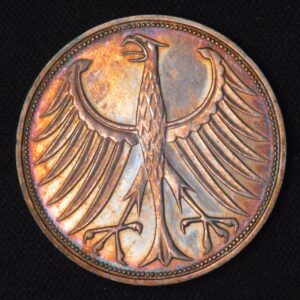
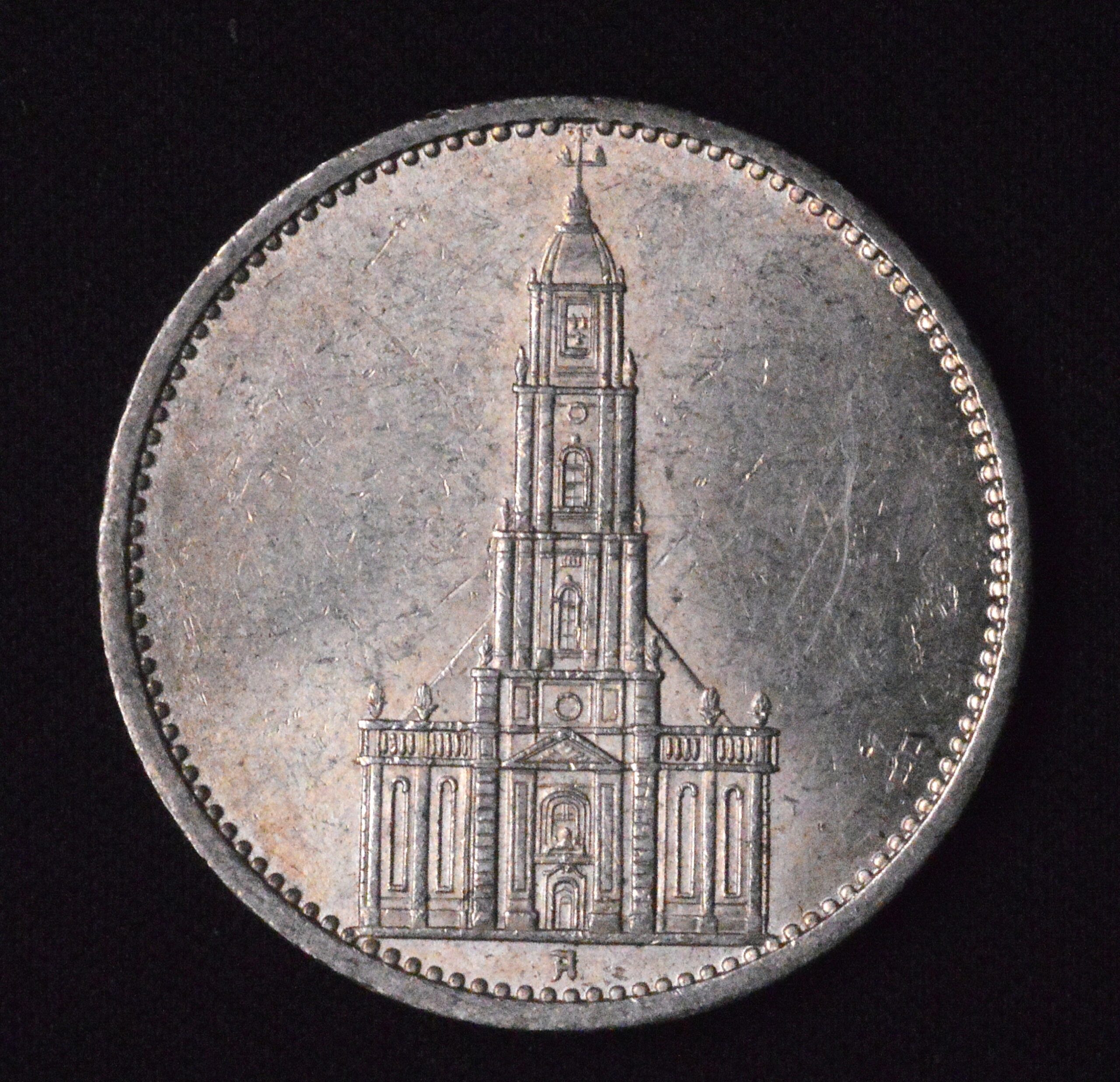
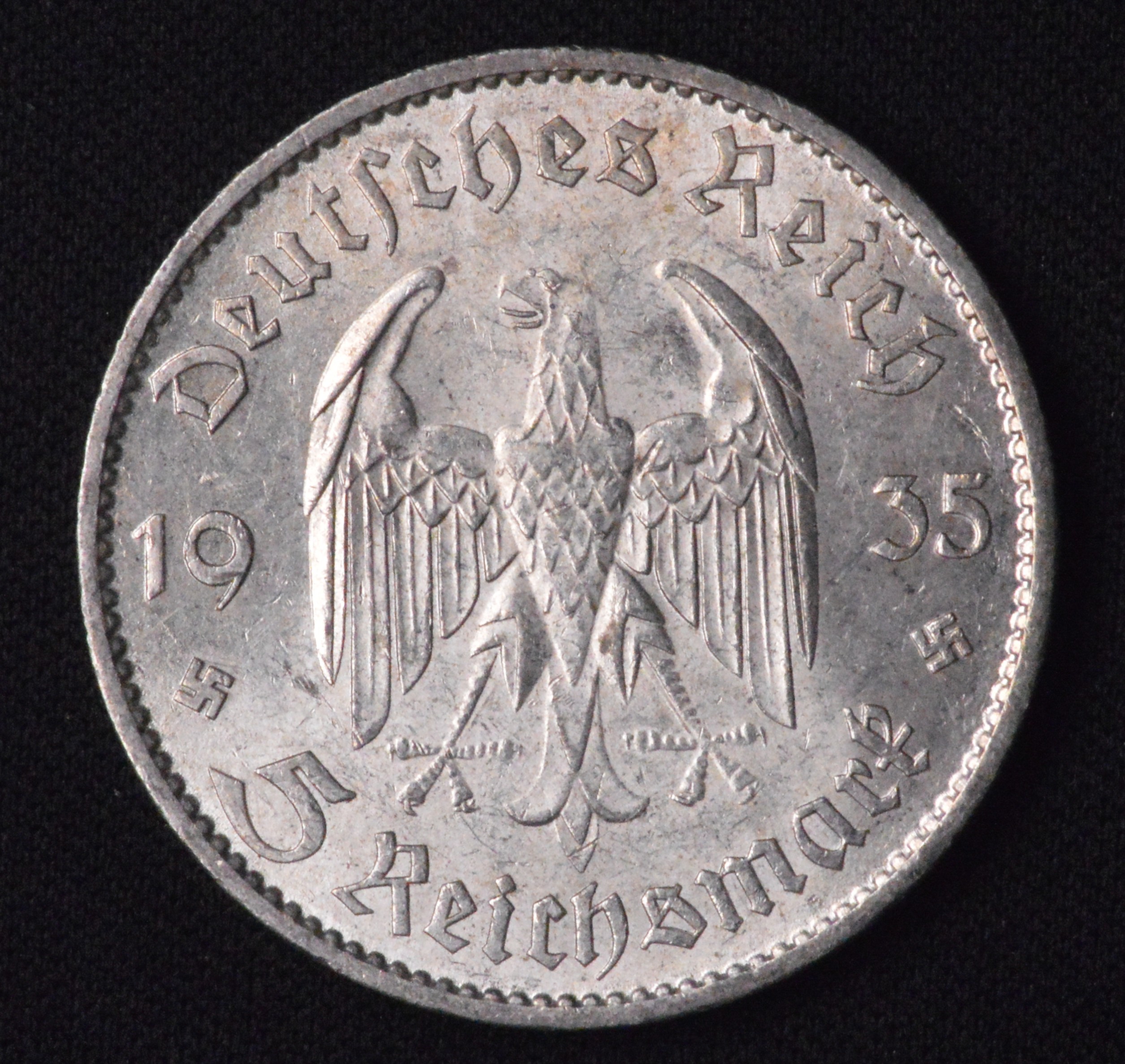
The German 5 Reichsmark silver coin, minted during the Third Reich era (1936–1939), is a well-known collectible coin notable for its historical context and quality craftsmanship. These coins are composed of 90% silver and 10% copper, weighing approximately 13.88 grams with a diameter of 29 mm, containing about 0.40 troy ounces of pure silver.

The obverse of the coin typically features the German eagle above a swastika within a wreath, symbolizing the Nazi regime at that time. The reverse displays a right-facing bust of Paul von Hindenburg, who was President of Germany before the Nazi era. The edge of the coin often carries an inscription, such as “GEMEINNUTZ GEHT VOR EIGENNUTZ,” meaning “Common good takes priority over self-interest.”

These coins were minted in several locations, identifiable by mint marks like A (Berlin), D (Munich), E (Muldenhütten), F (Stuttgart), G (Karlsruhe), and J (Hamburg). Mintages vary by year and mint, with millions produced, making them common but still highly collectible due to their silver content and historical significance.

Prices for these coins depend on condition, rarity of mint marks, and demand, with circulated coins generally valued around $20 and higher grades or rarer mint marks commanding premiums. The coin is valued not only for its silver content but also as a piece of numismatic and historical interest related to Germany’s complex 20th-century history.

In summary, the German 5 Reichsmark silver coin from the Third Reich era is a 90% silver, 13.88-gram collectible coin featuring Paul von Hindenburg and Nazi era symbolism, with value depending on condition and mint mark, and it is sought after by collectors of historic and silver coins.​

The German 5 Reichsmark silver coin, minted during the Third Reich era (1936–1939), is a well-known collectible coin notable for its historical context and quality craftsmanship. These coins are composed of 90% silver and 10% copper, weighing approximately 13.88 grams with a diameter of 29 mm, containing about 0.40 troy ounces of pure silver.

The obverse of the coin typically features the German eagle above a swastika within a wreath, symbolizing the Nazi regime at that time. The reverse displays a right-facing bust of Paul von Hindenburg, who was President of Germany before the Nazi era. The edge of the coin often carries an inscription, such as “GEMEINNUTZ GEHT VOR EIGENNUTZ,” meaning “Common good takes priority over self-interest.”

These coins were minted in several locations, identifiable by mint marks like A (Berlin), D (Munich), E (Muldenhütten), F (Stuttgart), G (Karlsruhe), and J (Hamburg). Mintages vary by year and mint, with millions produced, making them common but still highly collectible due to their silver content and historical significance.

Prices for these coins depend on condition, rarity of mint marks, and demand, with circulated coins generally valued around $20 and higher grades or rarer mint marks commanding premiums. The coin is valued not only for its silver content but also as a piece of numismatic and historical interest related to Germany’s complex 20th-century history.

In summary, the German 5 Reichsmark silver coin from the Third Reich era is a 90% silver, 13.88-gram collectible coin featuring Paul von Hindenburg and Nazi era symbolism, with value depending on condition and mint mark, and it is sought after by collectors of historic and silver coins.​

Description

The German 5 Reichsmark silver coin, minted during the Third Reich era (1936–1939), is a well-known collectible coin notable for its historical context and quality craftsmanship. These coins are composed of 90% silver and 10% copper, weighing approximately 13.88 grams with a diameter of 29 mm, containing about 0.40 troy ounces of pure silver.

The obverse of the coin typically features the German eagle above a swastika within a wreath, symbolizing the Nazi regime at that time. The reverse displays a right-facing bust of Paul von Hindenburg, who was President of Germany before the Nazi era. The edge of the coin often carries an inscription, such as “GEMEINNUTZ GEHT VOR EIGENNUTZ,” meaning “Common good takes priority over self-interest.”

These coins were minted in several locations, identifiable by mint marks like A (Berlin), D (Munich), E (Muldenhütten), F (Stuttgart), G (Karlsruhe), and J (Hamburg). Mintages vary by year and mint, with millions produced, making them common but still highly collectible due to their silver content and historical significance.

Prices for these coins depend on condition, rarity of mint marks, and demand, with circulated coins generally valued around $20 and higher grades or rarer mint marks commanding premiums. The coin is valued not only for its silver content but also as a piece of numismatic and historical interest related to Germany’s complex 20th-century history.

In summary, the German 5 Reichsmark silver coin from the Third Reich era is a 90% silver, 13.88-gram collectible coin featuring Paul von Hindenburg and Nazi era symbolism, with value depending on condition and mint mark, and it is sought after by collectors of historic and silver coins.​

CUSTOMER FEEDBACK

Set your categories menu in Header builder -> Mobile -> Mobile menu element -> Show/Hide -> Choose menu
Create your first navigation menu here
Shopping cart
Start typing to see posts you are looking for.

OFFER YOUR PRICE!

Send Your Offer Below! Scroll the photo right to left for a closer look.

Silver German 5 Reichmark BU!